
Nikon NIKKOR Z MC 105mm f/2.8 VR S (US model 20100) vs Nikon AF-S VR Micro-Nikkor 105mm f/2.8G IF-ED (US model 2160; JAA630DB)
Should you use the native Z-mount MC 105mm, or keep/use the F-mount AF-S Micro 105mm and add an FTZ adapter when using a Z body?
Products compared
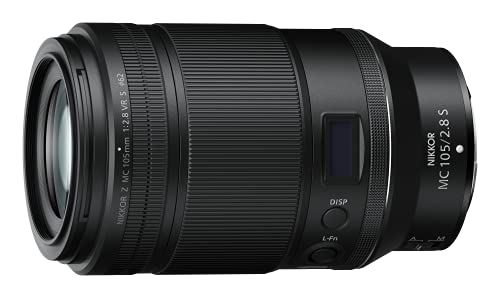
ASIN B096DHS1BF
Nikon NIKKOR Z MC 105mm f/2.8 VR S (US model 20100)
You want a native Z-mount lens, an assignable control ring, or the lower listed weight of the bare lens, and the Z setup fits your camera and budget.
Last observed offer
$896.95
List Price: $1,149.95
Size: 10.5 centimeter (Pack of 1)
Price checked
Observed offer ends
Observed condition: new. Coupon and subscription requirements unverified.

ASIN B000EOSHGQ
Nikon AF-S VR Micro-Nikkor 105mm f/2.8G IF-ED (US model 2160; JAA630DB)
You use an F-mount DSLR, or already own the AF-S lens and want to keep using it on a compatible Z body with a Nikon Mount Adapter FTZ or FTZ II; its manual documents physical focus/VR switches and a reproduction-ratio scale.
Last observed offer
$1,124.94
- Confirm offer eligibility on Amazon
Size: 105mm
Price checked
Observed condition: new. Coupon and subscription requirements unverified.
Prices are per listed package. Pickoryx may earn a commission from qualifying purchases through the paid Amazon links on this page, at no added cost to you.
Published by Pickoryx · Published 2026-10-02 · Source checked 2026-10-02 14:19 UTC
The main trade-off
Both are 105mm f/2.8 lenses specified for 1:1 reproduction. The Z version mounts directly to a Z body, offers an assignable control ring and has a lower listed bare-lens weight; the AF-S version uses Nikon F mount and needs Nikon Mount Adapter FTZ or FTZ II on a Z body, while its manual documents direct focus-mode, focus-limit and VR switches plus a reproduction-ratio scale. The AF-S lens is shorter but heavier by Nikon's lens-only specifications.
Quick verdict
Both lenses are 105mm f/2.8 optics with a listed 1:1 maximum reproduction ratio. For a Nikon Z camera, the Z MC 105mm mounts directly; the F-mount AF-S lens needs a compatible Nikon Mount Adapter FTZ or FTZ II, and Nikon's compatibility guide lists autofocus support for AF-S Type G lenses. Choose between that camera-mount path, the documented lens controls, and the bare-lens carry trade-off—not an unmeasured image-quality or autofocus winner.
Choose Nikon NIKKOR Z MC 105mm f/2.8 VR S (US model 20100) if
- You want a native Z-mount lens, an assignable control ring, or the lower listed weight of the bare lens, and the Z setup fits your camera and budget.
Choose Nikon AF-S VR Micro-Nikkor 105mm f/2.8G IF-ED (US model 2160; JAA630DB) if
- You use an F-mount DSLR, or already own the AF-S lens and want to keep using it on a compatible Z body with a Nikon Mount Adapter FTZ or FTZ II; its manual documents physical focus/VR switches and a reproduction-ratio scale.
When the recommendation changes
- For a Z body, check the exact camera body and FTZ/FTZ II compatibility table before relying on AF-S autofocus and exposure modes; compatibility is specific to lens type and camera/adapter conditions.
- Compare bare-lens dimensions and mass only: the FTZ adapter changes the AF-S system's carry size and weight, and that combined setup is not quantified here.
- Both lenses are listed for 1:1 reproduction. Nikon's minimum-focus distances are measured from the focal plane, not from the front element, so they do not directly state working distance.
The differences that matter
| Decision point | Nikon NIKKOR Z MC 105mm f/2.8 VR S (US model 20100) | Nikon AF-S VR Micro-Nikkor 105mm f/2.8G IF-ED (US model 2160; JAA630DB) |
|---|---|---|
| Mount And Camera Workflow | Nikon specifies a Z mount for the NIKKOR Z MC 105mm; it is the direct-mount option for a Nikon Z body.[1] | Nikon specifies a Nikon F-bayonet mount for the AF-S VR Micro-Nikkor 105mm f/2.8G IF-ED and identifies it as a G-type AF-S lens with a CPU.[3, 4] |
What this changes: On a compatible Z body, the AF-S F-mount lens requires an FTZ or FTZ II adapter. Nikon's FTZ compatibility table lists autofocus and exposure modes for AF-S Type G/E/D lenses; the exact AF-S 105mm manual identifies this lens as G-type AF-S. Confirm the exact camera body and adapter before purchase. On an F-mount DSLR, the AF-S lens uses its matching F mount directly. This is a system-fit choice, not a claim that one lens focuses faster.[1, 4, 5] The better fit depends on your priorities | ||
| Macro Control And Carry Workflow | Nikon lists an assignable control ring (functions include aperture or exposure compensation), a focus-range limiter, 630 g weight and approximate dimensions of 85 × 140 mm for the Z MC 105mm.[2, 1] | The AF-S 105mm manual documents a focus-mode switch (M/A or M), focus-limit switch, VR on/off switch and reproduction-ratio scale. Nikon lists 720 g and approximate dimensions of 83 × 116 mm for the lens.[4, 3] |
What this changes: The Z lens is 90 g lighter by Nikon's listed bare-lens weights (720 g − 630 g), but its listed body is 24 mm longer (140 mm − 116 mm). The Z lens offers an assignable ring; the AF-S manual describes direct switches and a reproduction-ratio scale. These documented control approaches and lens-only measurements help match a preferred macro setup. They do not establish handling comfort or performance, and the AF-S figures exclude any FTZ adapter.[2, 1, 4, 3] The better fit depends on your priorities | ||
Best for your routine
Mounting a 105mm lens directly on a Nikon Z body
Best fit: Nikon NIKKOR Z MC 105mm f/2.8 VR S (US model 20100)
Based on listed features, not comparative testing.
The Z MC 105mm has a Nikon Z mount; the AF-S lens uses Nikon F mount and needs an FTZ/FTZ II on a compatible Z body.
Continuing to use a 105mm lens directly on a Nikon F-mount DSLR
Best fit: Nikon AF-S VR Micro-Nikkor 105mm f/2.8G IF-ED (US model 2160; JAA630DB)
Based on listed features, not comparative testing.
The AF-S Micro-Nikkor uses Nikon F bayonet mount; the Z MC 105mm is the Z-mount model.
Reducing the listed mass of the lens itself
Best fit: Nikon NIKKOR Z MC 105mm f/2.8 VR S (US model 20100)
Based on listed features, not comparative testing.
Nikon lists 630 g for the Z lens and 720 g for the AF-S lens; these are bare-lens figures and omit the AF-S lens's adapter when used on Z.
Prioritizing a shorter bare lens body and the documented AF-S control layout
Best fit: Nikon AF-S VR Micro-Nikkor 105mm f/2.8G IF-ED (US model 2160; JAA630DB)
Based on listed features, not comparative testing.
Nikon lists the AF-S lens at 116 mm long versus 140 mm for the Z lens; its manual also documents focus-mode/limit and VR switches plus a reproduction-ratio scale. The AF-S lens itself is heavier by the listed specifications.
Value and trade-offs
One or both observed offers have eligibility conditions, so no unrestricted price difference is shown.
Current comparable checkout offers were not verified. If prices differ, compare the direct Z-mount workflow, lens controls and bare-lens carry specifications against the value of keeping or buying an F-mount lens and, for Z use, obtaining a compatible adapter.
Price timing is not assessed because no comparable current offer or price-history window was verified.
Limitations
- Pickoryx did not test either lens. Nikon's specifications and compatibility documentation do not establish comparative sharpness, bokeh, autofocus speed, VR effectiveness, comfort or reliability.
- Nikon's FTZ compatibility guide applies by lens type and has camera/adapter conditions. The AF-S lens is identified as Type G AF-S, but readers should check the exact camera body and current compatibility information before relying on specific functions.
- The 630 g/720 g weights and 140 mm/116 mm lengths describe the lenses themselves; they do not include an FTZ or FTZ II adapter or compare complete camera-and-lens kits.
- Both lenses are listed for 1:1 reproduction. Minimum-focus distances are measured from the focal plane and are not front-element working distances.
- Current offer prices, seller/package details and price history were not checked.
Questions shoppers ask
Does the AF-S Micro-Nikkor work on a Nikon Z camera?
It is an F-mount AF-S Type G lens. Nikon's FTZ/FTZ II guide lists autofocus support for AF-S Type G/E/D lenses, and Nikon says F-mount lenses attach to Z bodies through the adapter. Check the compatibility guide for your exact body and adapter before relying on specific functions.
Do both lenses reach 1:1 magnification?
Yes. Nikon lists 1x maximum reproduction for the Z MC 105mm and the AF-S manual specifies 1:1 life-size reproduction for the AF-S Micro-Nikkor. Their minimum-focus distances are measured from the camera's focal plane, not from the front of the lens.
Methodology and sources
Compared each exact lens's mount and documented camera-adapter path, then compared manufacturer-listed macro controls and lens-only mass/dimensions. The 90g mass difference and 24mm length difference are arithmetic from Nikon-listed figures; no optical, autofocus or stabilization superiority was inferred.
AI assistance organized and cross-checked the cited Nikon documents; Pickoryx did not test either lens.
View 5 sources
- 1.NIKKOR Z MC 105mm f/2.8 VR S | macro lensNikon Imaging USA · Official specifications · Source checked 2026-10-02 14:18 UTC
Evidence used on this page
- Tech Specs: focal length, maximum aperture, format and mount; Specifications: maximum reproduction ratio, minimum focus distance, 62 mm filter, 85 × 140 mm dimensions and 630 g weight (lines 128–276).: Nikon USA identifies model 20100 as the NIKKOR Z MC 105mm f/2.8 VR S. The page lists Nikon Z mount, FX/DX compatibility, 105mm, f/2.8, 1x maximum reproduction ratio, 0.29m minimum focus distance, 62mm filter, approximately 85 × 140mm dimensions, 630g and VR support.
- 2.NIKKOR Z MC 105mm f/2.8 VR S | Z mount LensesNikon Corporation · Official support · Source checked 2026-10-02 14:18 UTC
Evidence used on this page
- Overview lines 78–84: focus-range limiter and assignable control ring (including aperture/exposure compensation); specifications lines 87–102: 105mm, f/2.8, 1:1, 0.29m from focal plane, 62mm, dimensions and 630g.: Nikon's exact Z MC 105mm page documents a focus-range limiter and control ring assignable to functions such as aperture or exposure compensation. It lists 105mm, f/2.8, 1x maximum reproduction ratio, 0.29m minimum focus from the focal plane, 62mm filter, approximately 85 × 140mm dimensions and 630g.
- 3.Nikon AF-S VR Micro-Nikkor 105mm f/2.8G IF-ED | DSLR LensesNikon Imaging USA · Official specifications · Source checked 2026-10-02 14:18 UTC
Evidence used on this page
- Tech Specs lines 50–92 and Specifications lines 93–211: model 2160, Nikon F-Bayonet, AF-S, G-type, FX/DX, 105mm, f/2.8, 1.0x, 0.314m minimum focus, 62mm, 83 × 116mm and 720g.: Nikon USA's model 2160 page identifies the AF-S VR Micro-Nikkor 105mm f/2.8G IF-ED as a Nikon F-Bayonet AF-S G-type lens, with 105mm f/2.8, FX/DX compatibility, VR, 0.314m minimum focus, 1.0x maximum reproduction ratio, 62mm filter, 83 × 116mm dimensions and 720g weight.
- 4.AF-S VR Micro-Nikkor 105mm f/2.8G IF-ED Instruction ManualNikon Corporation · Official support · Source checked 2026-10-02 14:18 UTC
Evidence used on this page
- English pages 17–18 lines 561–617: exact lens model, M/A and M focus-mode operation and focus limiter; page 16 lines 516–525 identifies physical focus-mode/focus-limit/VR switches and reproduction-ratio scale; page 24 lines 823–836 identifies G-type AF-S, Nikon bayonet and 1:1 reproduction.: Nikon's manual names the exact AF-S VR Micro-Nikkor 105mm f/2.8G IF-ED as a G-type AF-S lens with Nikon bayonet mount and specifies 1:1 life-size reproduction. It documents manual override in M/A mode, a separate focus-mode switch, a focus-limit switch with FULL and infinity-to-0.5m ranges, a VR on/off switch and a reproduction-ratio scale.
- 5.Compatible F Mount LensesNikon Corporation · Official support · Source checked 2026-10-02 14:18 UTC
Evidence used on this page
- Pages 1–2: supported-features table and compatible lens-type list, including AF-S Type G/E/D autofocus and camera shooting/metering support when attached to Z-mount cameras via FTZ II/FTZ.: Nikon's FTZ/FTZ II compatibility document says its features table applies to F-mount lenses on Z cameras through either adapter. It lists autofocus and shooting/metering support for AF-S Type G/E/D lenses. Combined with the exact AF-S 105mm manual's G-type AF-S identification, it supports the bounded compatibility statement; exact body/adapter still needs checking.